
How to Choose the Right Watts Water Pressure Regulator
Did you know? almost 40% early fixture failures are caused by unstable supply conditions rather than bad fittings. We start with that scale because choosing the right device truly saves time and money.
At Installation Parts Supply, we help you quickly identify, compare, and purchase the exact watts water regulator you need across the United States. Our stock includes proven series and models for residential and light commercial jobs, each supported by factory documentation and matching service kits.
This guide breaks down the main decision factors—outlet setpoint, inlet conditions, flow requirements, and media compatibility—so you can match a model with no second-guessing. We also show why adjustability matters when fixture counts change and how unions and gauge ports simplify service.
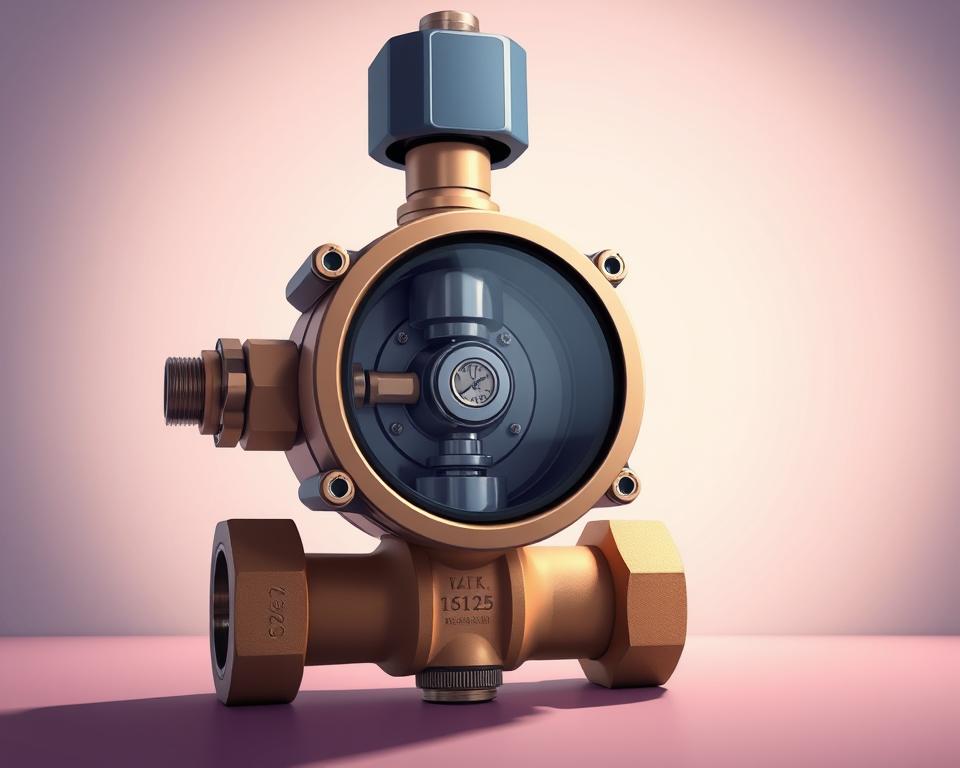
- Select by outlet psi and flow demand to prevent selecting a valve that’s too small or too large.
- Align series and model with your specific applications and material requirements.
- Rely on union connections and gauge ports to make maintenance simpler.
- Confirm that service kits for diaphragms, O-rings, and seats are available.
- We compare features and confirm compatibility so your customer experience is smooth.
Find the best fit with Installation Parts Supply: pressure, applications, and connections that match your system
We support contractors and engineers by mapping system specifications directly to product features. First, we define inlet and outlet targets so the chosen valve maintains outlet psi under real operating demand. Then we align application type—residential, light commercial, OEM skids, or deionized water—with materials and expected duty cycle.
We verify the adjustable range and spring options to avoid undersizing or reducing flow. The compact P60 model comes factory set at 50 psi, can be adjusted, and is rated for up to 300 psi inlet.
Materials and internals that make the difference
Key internal parts use FDA-grade elastomers for sealing and 300 Series stainless steel to resist corrosion. Lead-free construction satisfies potable regulations and helps your installation stay compliant.
Unions and connection styles
Choose NPT female threads, quick disconnects, or a double union setup for fast service. LF25AUB-Z3 and LFN45B series work with union tailpiece kits, cutting downtime during change-outs.
- Always confirm maximum working pressure and temperature for the model before ordering.
- Include strainers and gauge ports for ongoing protection and testing.
- Choose straight or 90° orientation to fit your available mechanical space.
| Valve model | Main internal components | Typical applications |
|---|---|---|
| P60 | Thermoplastic body, 300 Series stainless steel, FDA elastomers | Deionized water systems and compact OEM skids |
| LF25AUB-Z3 | Lead-free valve body plus compatible union tailpiece kits | General residential and light commercial applications |
| LFN45B | Seat/stem repair modules with stainless steel strainers | Potable and distribution systems |
Watts Water Pressure Regulator models we carry and when to choose each
We carry three main models, letting you match size, service options, and materials to each job.
The LF25AUB-Z3 is a lead-free pressure reducing valve for 1/2–2 in lines. This model is suited for standard plumbing systems and light commercial applications.
Service kits include diaphragm, O-ring, union gasket, strainer, strainer plug gasket, bottom plug gasket, disc, and seat for easy onsite repair.
LFN45B series overview: lead-free body with repair modules and stainless strainer
LFN45B regulators provide code-compliant pressure reduction using a swappable seat/stem module. Inside the module, an EPDM diaphragm and stainless steel strainer increase durability and service life.
Using union tailpiece kits cuts downtime and makes valve change-outs easier during maintenance.
P60 miniature regulator: compact, preset, and adjustable
The P60 reducing valve is designed for 1/4 inch FPT/NPT connections. It arrives factory preset at 50 psi and remains adjustable, with a 300 psi maximum working rating.
Its thermoplastic body and 300 Series steel internals work well for deionized applications and tight OEM panels.
| Regulator | Key parts | Recommended use |
|---|---|---|
| LF25AUB-Z3 | Diaphragm, disc, seat components, strainer, and union kit | Residential, light commercial |
| LFN45B | Seat/stem module, EPDM diaphragm, stainless steel strainer | Code-compliant distribution |
| P60 | Thermoplastic body with 1/4″ NPT, optional gauge and strainer | OEM panels, point-of-use |
- Go with LF25AUB-Z3 when you need a wide size range and robust parts availability.
- Use LFN45B when modular repair and stainless strainer assemblies will speed your service work.
- Select P60 when tight spaces and deionized service call for a compact regulator with a factory setpoint.
Installation, sizing, and maintenance tips for reliable flow and psi control
Choosing proper connections and having the right service kit ready both speeds installation and limits repair downtime.
Always size the regulator according to peak flow demand, not average conditions. Use fixture unit counts or manufacturer equipment data to verify the valve maintains outlet pressure at full flow.
Install union tailpiece kits on LF25AUB and LFN45B models so the valve can be removed for bench servicing. The LF25AUB kit includes diaphragm, O-ring, union gasket, strainer, strainer plug gasket, bottom plug gasket, disc, and seat.
LFN45B service modules give a complete seat/stem assembly with an EPDM diaphragm and stainless steel strainer. This modular design cuts rebuild time and restores the regulator to spec quickly.
Kits, connections, and start-up checks
- For threaded connections, apply proper sealant and alignment; for sweat joins, finish solder before inserting heat-sensitive parts.
- Add a downstream gauge via a gauge port to verify psi during commissioning and troubleshooting.
- Protect internals with an upstream strainer or the P60’s optional in-body strainer to prevent debris from fouling the diaphragm, disc, or seat.
| Service item | Included components | Main benefit |
|---|---|---|
| LF25AUB kit | Diaphragm, O-ring, union gasket, strainer parts, disc, and seat | Allows a complete rebuild in a single service call |
| LFN45B repair module | Seat/stem module, EPDM diaphragm, stainless steel strainer | Quick module swap reduces downtime |
| P60 options | Factory preset 50 psi with optional gauge, strainer, and mounting kit | Good OEM panel fit with stable outlet pressure |
Verify outlet setpoint while fixtures are flowing, adjust in small steps to your target psi, and keep a log of maintenance dates and replaced parts. We package unions, kits, and accessories together so installations and service remain smooth every time.
Conclusion
Rely on our team to pair the right model with the right spares so installation stays on time and service is efficient.
We guide each customer from initial shortlist to final install, verifying the correct PRV, series, and accessories with clear specs and quick delivery.
Before you order, confirm setpoint (psi), pick the right size, and add a double union or union tailpiece kit for painless service. Make sure to include a maintenance kit and a strainer so key parts like diaphragm, disc, seat, and seals are ready onsite.
We can advise on solder or threaded installs and match steel internals for corrosion resistance. Get in touch so we can confirm components, ship parts in one package, and help your system run with as little downtime as possible.
Regulator FAQ
How should we pick the correct pressure reducing valve for a home system?
We start by measuring inlet and desired outlet psi, then match flow capacity to peak demand. For most homes a model rated for common household flow and adjustable outlet works best. Check whether you need NPT or union connections and choose materials that are compatible with potable water. In tight service areas, we recommend including a strainer and union kit to make future service easier.
What factors guide selection for light commercial or OEM applications?
We look at continuous flow rate, how often the valve will cycle, and whether the media is special—like deionized or softened water. When corrosion resistance or cleanliness matters, we prefer models with stainless internals and FDA-grade elastomer seals. Additionally, we verify that gauge ports and quick disconnects are available for easier monitoring and service.
When is it best to choose stainless internals and lead-free construction?
We recommend stainless steel internals and lead-free bodies when the installation requires corrosion resistance, regulatory compliance, or use with treated and deionized supplies. These materials lengthen service life and lower contamination risks in potable and critical-process systems.
How do double unions and other connection types change installation and service?
Double union bodies make removal and service easier because the surrounding piping doesn’t need to be disturbed. NPT threaded ends work well in tight spaces, and union tailpiece kits plus quick disconnects make replacement faster. For each job, we pick the connection style that balances access, service ease, and downtime.
Which model is best for adjustable residential pressure control with easy servicing?
For residential use, we prefer adjustable regulators that offer union connections, internal strainers, and replaceable diaphragms and seats. These features let us tune outlet psi and perform fast repairs using common service parts to maintain reliable flow.
What benefits do lead-free valves and modular repair kits provide?
Lead-free valves comply with drinking water regulations and help protect water quality. Repair modules and service kits allow fast replacement of diaphragms, discs, and O-rings, restoring valve performance without swapping the entire valve, which saves time and money.
When should we choose a miniature 1/4 inch regulator?
We choose a 1/4 in. FPT/NPT miniature regulator for compact equipment, instrumentation, or low-flow branches. These thermoplastic or metal-bodied units are often factory set (for example at 50 psi) and typically allow adjustment up to their rated maximum, which suits small systems with lower demand.
What’s the best approach to sizing for peak flow and stable outlet pressure?
We estimate peak flow demand using fixture or equipment ratings, then pick a valve whose Cv supports that flow with minimal pressure drop. When sized properly, the valve avoids rapid cycling and maintains steady outlet pressure across changing loads.
What service parts should we keep on hand for routine maintenance?
We stock common items: diaphragm and O-ring sets, seat and disc replacements, strainers, and union tailpiece kits. With these spares available, you can complete quick repairs and limit overall downtime.
How often should we inspect and clean strainers and seats?
Strainers are inspected during planned maintenance, typically every 6 to 12 months, based on incoming water quality. If we see pressure loss or noisy operation, we clean or replace the strainer and inspect the seats to bring flow and sealing back to normal.
Can a regulator be configured for deionized or chemically sensitive applications?
Yes. By selecting regulators with suitable elastomers and stainless steel internals and avoiding ion-leaching materials, they can be used in such systems. Also, we recommend regular servicing and appropriate filtration upstream to protect the regulator and maintain purity.